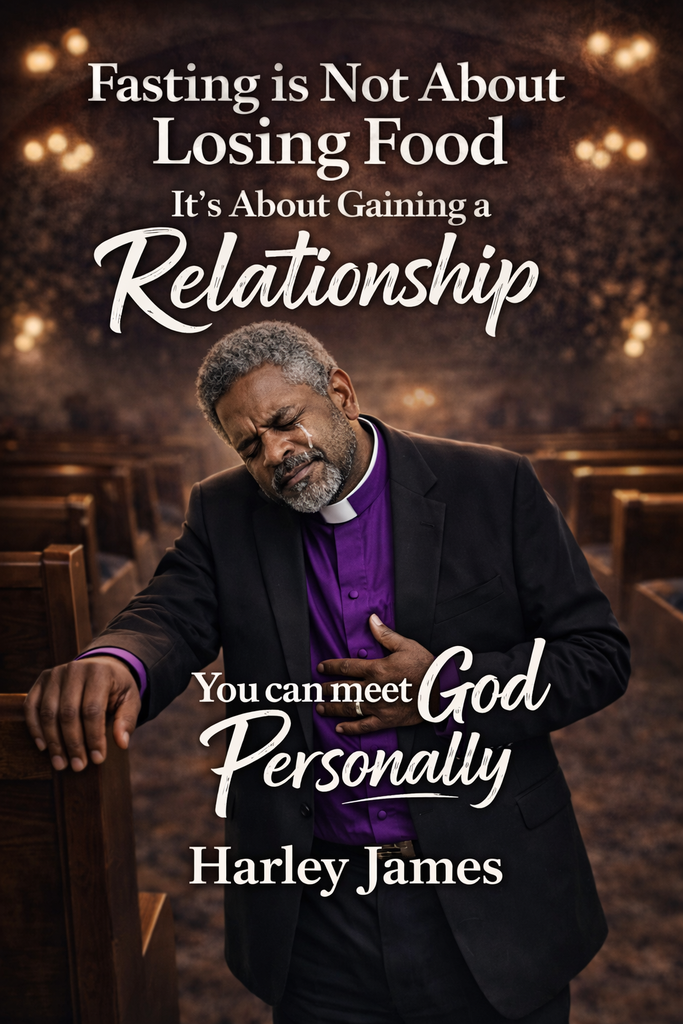
Fasting Is Not About Losing Food: It’s About Gaining a Relationship
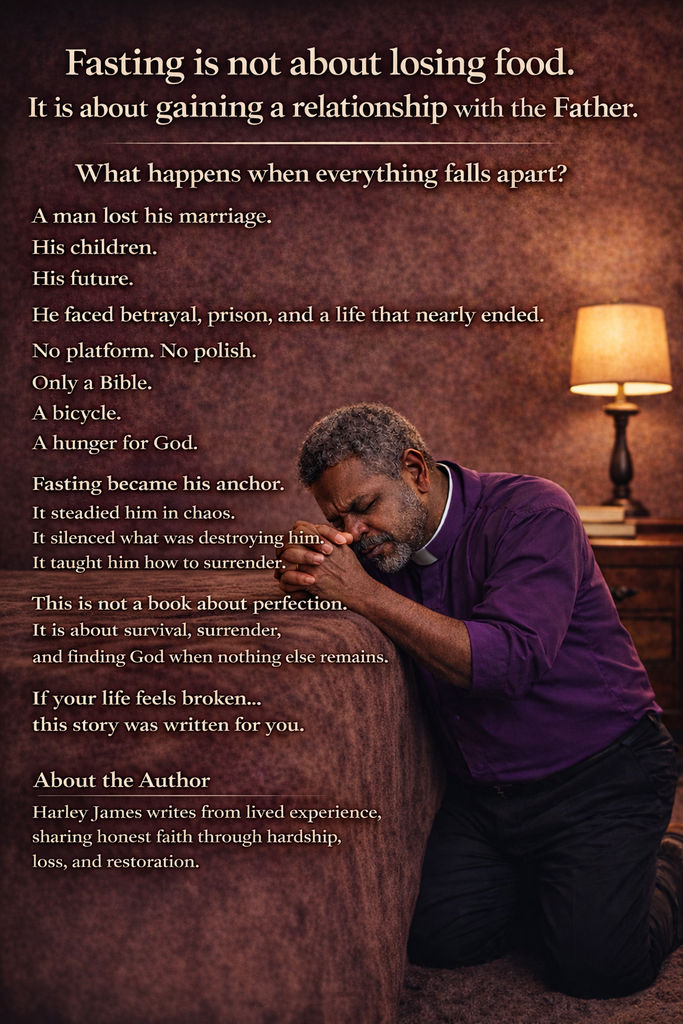
Fasting Is Not About Losing Food by Harley James is a personal story about learning that fasting is not mainly about food. It is about drawing closer to the Father, learning surrender, building endurance, and discovering what remains when comfort, control, and distraction are stripped away.
You Can Meet God Personally
Fasting Is Not About Losing Food: Learning to Trust the Father
The story begins when Harley James was a young man riding a ten-speed bicycle because he had lost his driver’s license. Long miles on the road became a place of prayer. He prayed out loud while riding, wrestled with his motives for ministry, and began asking whether he wanted to be important or whether he was truly answering God’s call. During that season, he began fasting privately and eventually completed a forty-day fast before leaving for seminary.
The early fasts taught him that the first days were not only a battle with hunger but also a battle with the mind. As hunger began to quiet, other things became clearer. The book describes fasting as a way of removing distraction, comfort, and hiding so that a person is forced to face what is really inside. The discipline that began on quiet bicycle roads later became preparation for crises he could not yet imagine.
The manuscript moves through marriage tension, anger, betrayal, family collapse, and moments when fasting became a form of restraint. In the darkest parts of the story, fasting was not presented as a way to impress God. It became a way of turning toward the Father when anger, fear, and helplessness threatened to take control.
Later chapters tell about jail, worship behind steel doors, years of court battles, and intercession for children he could not physically protect. The book repeatedly returns to the idea that a father may not be able to fight every battle for his children, but he can stand in the gap through prayer and fasting.
The story continues through the empty house, years of anger toward God, the gun that did not fire in Alaska, wrestling with God for answers, and the long-term effects of fasting on fear and trust. Near the end of the book, a stroke exposes another battle that had followed the author for years: pride. The final lesson is not that fasting removes every problem, but that surrender, humility, and relationship with God can reshape the person walking through them.
Explore more Christian books and faith resources from Harley James and Beyond the Walls Press.